

Blog
NK Cells – Natural Killer Cells: The Skin’s Natural Defence and Regeneration Support

What Are NK Cells?
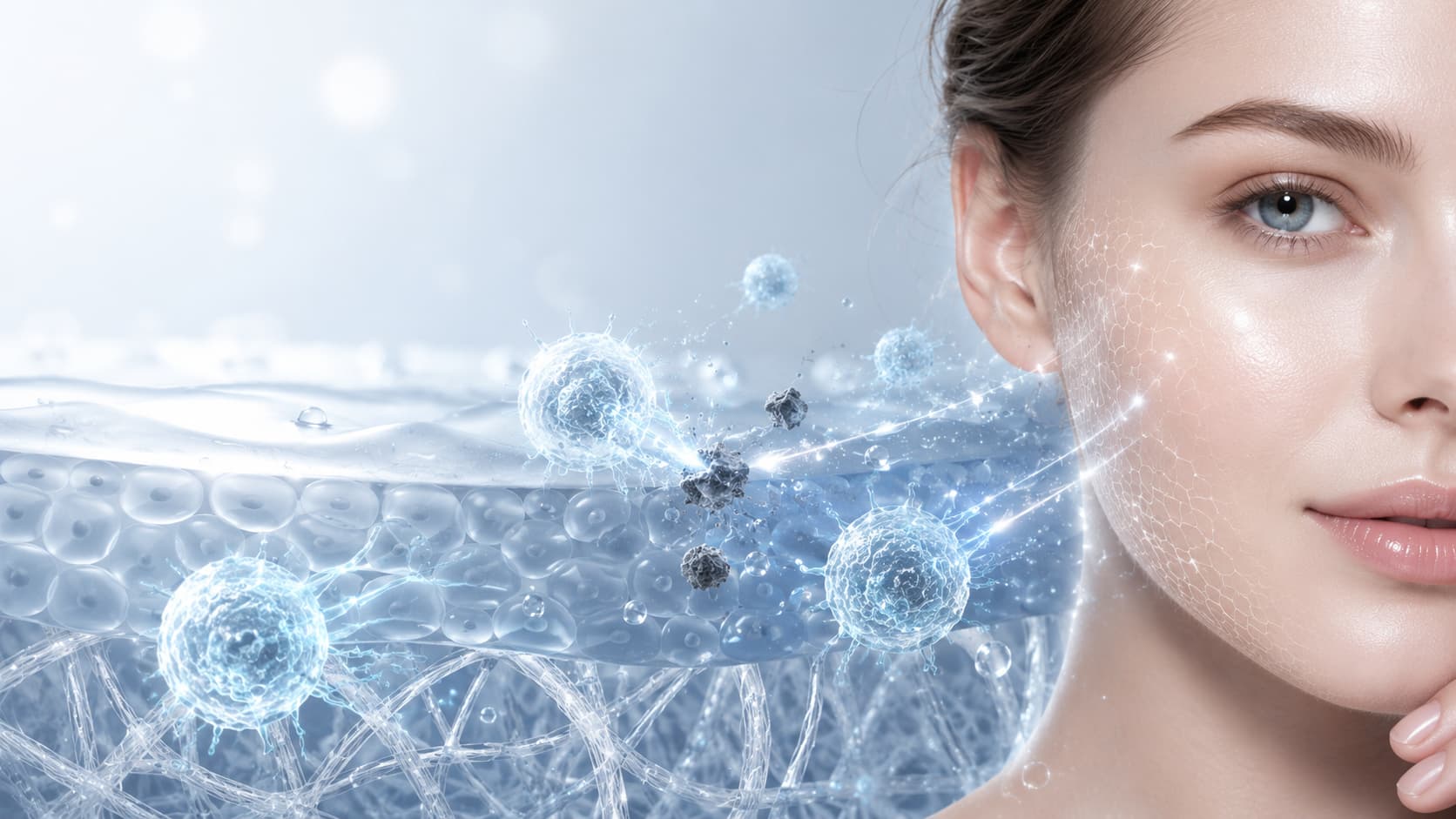
NK cells, also known as Natural Killer Cells, are specialised immune cells produced in the bone marrow. They are part of the innate immune system, which means they belong to the body’s first line of defence.
Although NK cells are a type of lymphocyte, they are different from T cells and B cells. Their key advantage is speed: they can act immediately, without requiring prior sensitisation or additional activation.
In the body, NK cells are mainly known for their ability to recognise and destroy infected, damaged, abnormal or stressed cells. This makes them important in immune surveillance, infection control and tissue protection.
Why Are NK Cells Important for Skin?
The skin is not only a visible surface; it is also an active immune organ. Every day, it is exposed to UV radiation, pollution, bacteria, viruses, inflammation, oxidative stress and environmental damage.
NK cells participate in the skin’s defence system by helping the body identify and eliminate compromised cells. This process is important for maintaining healthier-looking skin, supporting regeneration and protecting the skin from external stress factors.
In skincare science, NK cell-related concepts are associated with:
- anti-aging care;
- support against photoaging caused by UV exposure;
- wrinkle care;
- improved skin tone;
- collagen protection;
- elasticity support;
- hydration;
- tissue regeneration support;
- inflammation control;
- damaged cell elimination;
- skin barrier and immune defence support.
NK Cells and Anti-Aging Care
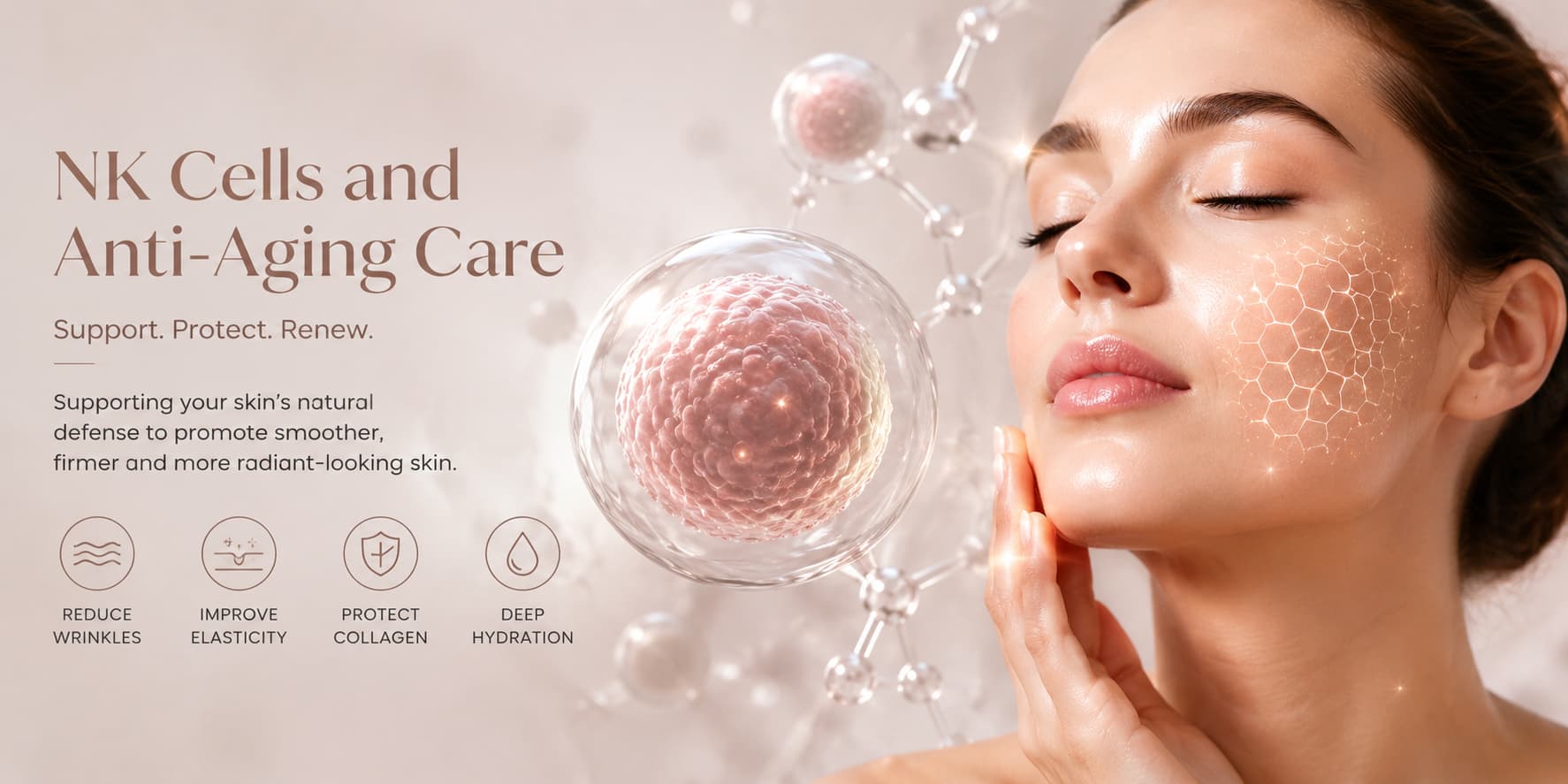
One of the most important skin concerns related to aging is the gradual weakening of the skin’s structure. With age, collagen production decreases, elasticity becomes weaker, and the skin may appear thinner, drier and less firm.
NK cell-related skincare concepts are often connected to anti-aging support, especially in products designed for skin that shows visible signs of fatigue, loss of firmness and reduced vitality.
They may be relevant for skin concerns such as:
- fine lines and wrinkles;
- deep wrinkles and expression lines;
- sagging skin;
- reduced elasticity;
- loss of facial contour;
- thinner, more transparent-looking skin;
- rough or uneven texture;
- enlarged pores;
- dryness and dehydration;
- dull or tired-looking complexion.
NK Cells and Photoaging
Photoaging is skin aging caused by long-term exposure to ultraviolet radiation. Unlike chronological aging, which happens naturally over time, photoaging is strongly influenced by sun exposure.
Common signs of photoaging include:
- uneven skin tone;
- brown spots;
- hyperpigmentation;
- rough texture;
- visible capillaries;
- redness;
- collagen breakdown;
- loss of firmness;
- deeper wrinkles.
NK cells are connected to the skin’s natural immune surveillance system, which helps the body respond to damaged or altered cells. This makes them especially interesting in skincare concepts focused on UV-induced aging, collagen protection and skin recovery.
NK Cells and Skin Tone Improvement
Uneven tone is one of the most common visible skin concerns. It may appear as dullness, dark spots, post-acne marks, melasma or sun-related pigmentation.
NK cell-related care may support a more balanced and healthier-looking complexion by helping the skin maintain better immune balance and recovery after external stress.
This type of skincare approach may be useful for:
- sun spots;
- post-inflammatory hyperpigmentation;
- acne marks;
- uneven pigmentation;
- dull skin tone;
- tired-looking skin;
- visible signs of environmental stress.
NK Cells and Skin Regeneration
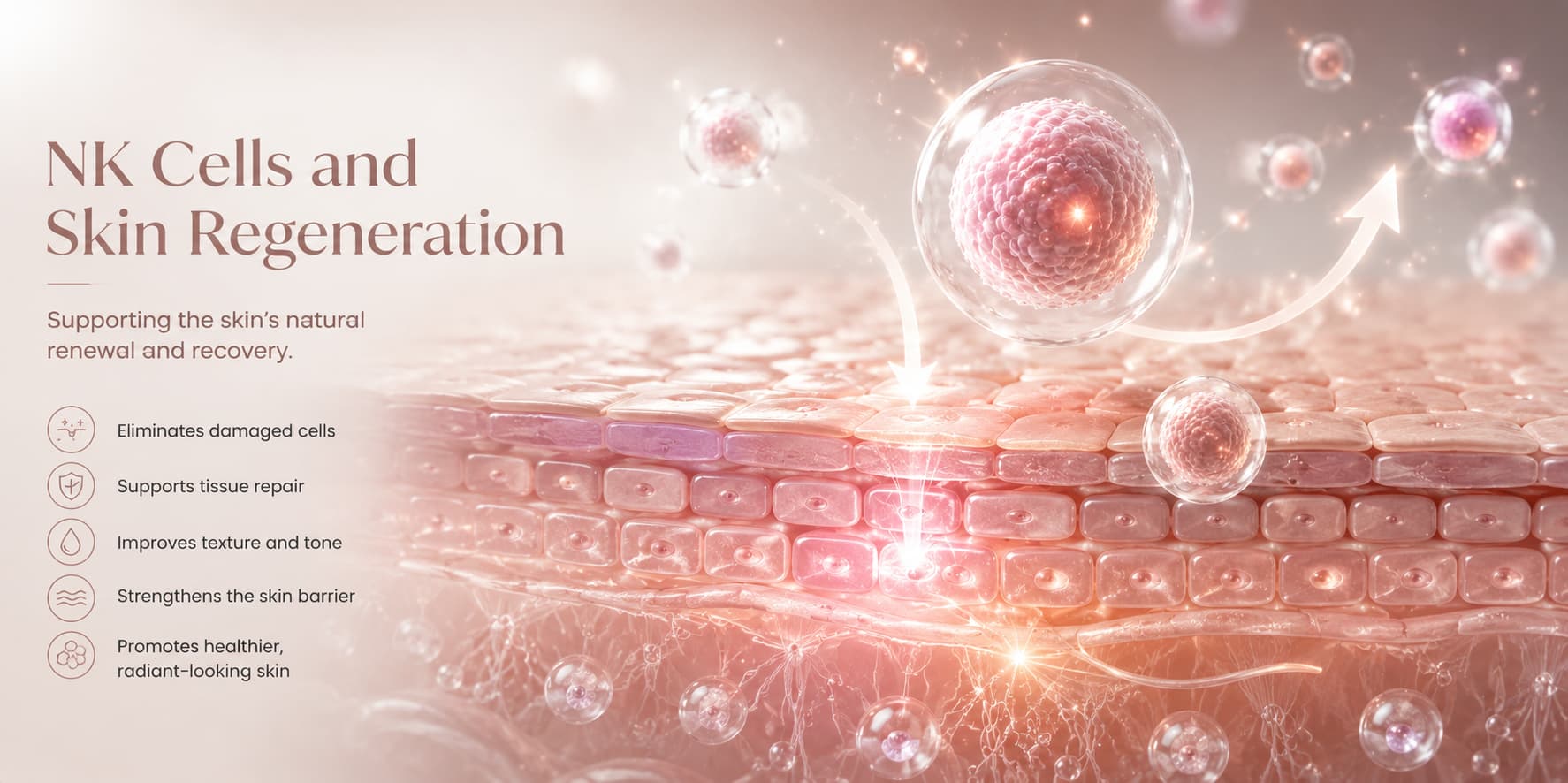
Skin regeneration is the process through which the skin renews itself, repairs damage and restores its protective function.
NK cells participate in broader tissue defence and recovery mechanisms by supporting the elimination of damaged cells and helping regulate inflammatory responses. In skincare, this concept is especially relevant for products focused on recovery, renewal and strengthening the skin’s appearance.
This may be connected to concerns such as:
- post-acne marks;
- rough texture;
- visible scars;
- stretch marks;
- weakened skin barrier;
- dullness;
- skin fatigue;
- post-procedure dryness or sensitivity.
NK Cells and Inflammation Control
Inflammation is a natural immune response, but when it becomes excessive or prolonged, it can contribute to visible skin problems.
Skin affected by inflammation may show:
- redness;
- sensitivity;
- irritation;
- acne;
- post-acne marks;
- roughness;
- uneven tone;
- dryness;
- weakened barrier function.
NK cells are involved in immune regulation and communication with other immune cells. They interact with dendritic cells, macrophages and T cells, helping coordinate immune responses.
This makes NK cell-related skincare especially relevant for skin that needs comfort, balance and recovery support.
NK Cells and Infection Defence
NK cells are known for their role in the body’s defence against viral, bacterial and fungal infections. They help identify compromised cells and support immune surveillance.
In biological terms, NK cells are involved in responses against:
- viral infections;
- bacterial colonisation;
- fungal elements;
- damaged or abnormal cells;
- cells with altered immune markers.
They also play a role in controlling latent viral reactivation, including herpesvirus-related immune responses. In skin science, this highlights their importance in maintaining the skin’s natural defence environment.
How NK Cells Work
NK cells use several mechanisms to control infected, damaged or abnormal cells.
1. Direct Cytotoxicity
NK cells can directly target compromised cells through cytotoxic activity. They may use mechanisms such as:
- perforin and granzyme pathway;
- FasL-Fas interaction;
- TRAIL-related apoptotic pathway.
In simple terms, NK cells help the body recognise cells that should no longer remain active and support their elimination.
2. Cytokine Production
NK cells also produce signalling molecules known as cytokines. These include:
- IFN-γ, which supports antiviral immune activity and macrophage activation;
- TNF-α, which participates in inflammatory responses;
- GM-CSF, which supports the maturation of dendritic cells.
These signals help coordinate the immune response and support communication between different immune cells.
3. Interaction with Other Immune Cells
NK cells do not work alone. They communicate with:
- dendritic cells;
- macrophages;
- T cells.
Through these interactions, NK cells help connect innate immunity with adaptive immune responses.
When Can NK Cell-Based Skincare Be Relevant?
NK cell-related skincare may be especially relevant for skin showing visible signs of aging, stress, inflammation or reduced vitality.
It may be suitable for concerns such as:
- deep wrinkles and lines;
- reduced skin thickness;
- loss of elasticity;
- sagging skin;
- rough texture;
- uneven surface;
- sun spots;
- melasma;
- post-inflammatory hyperpigmentation;
- dilated capillaries;
- facial redness;
- acne and post-acne marks;
- surgical scars;
- stretch marks;
- actinic keratosis-related roughness;
- dryness and dehydration;
- loss of volume;
- visible collagen degradation;
- atopic-prone sensitive skin.
NK Cells in Advanced Cosmetic Care
Modern skincare is moving beyond simple hydration and surface-level care. Advanced cosmetic formulas increasingly focus on cellular communication, skin immunity, regeneration support and visible repair.
NK cell-related ingredients and technologies belong to this more advanced skincare direction. They are especially relevant in formulas designed to support:
- stronger-looking skin;
- improved elasticity;
- smoother texture;
- brighter complexion;
- visible wrinkle care;
- healthier-looking skin tone;
- better skin comfort;
- post-stress recovery.
This does not mean that skincare products act like medical treatments. Instead, the value of NK cell-based cosmetic concepts lies in supporting the skin’s appearance, comfort and resilience through advanced cosmetic science.
Final Thoughts
NK cells are an important part of the body’s natural immune defence. In skin science, they are associated with protection, surveillance, regeneration and inflammatory balance.
For skincare, this makes NK cell-related technology especially interesting in products focused on anti-aging care, photoaging support, elasticity, skin tone improvement, hydration and recovery.
As skin is constantly exposed to external stress, advanced cosmetic care that supports its natural defence and renewal processes can play an important role in maintaining a healthier, smoother and more radiant-looking complexion.