
NK Cells – Natural Killer Cells
- Anti-aging effect
- Fight against photoaging (UV-induced aging)
- Reduction of wrinkles
- Improvement of skin tone
- Protection of collagen
- Increase of elasticity
- Reduction of hyperpigmentation
- Skin hydration
- Participates in the process of tissue regeneration
- Wound healing
- Destroys necrotic tissue
- Control of inflammation
- Elimination of damaged cells
- Prevention of infections
- Immune surveillance
- Protects the skin from viral and bacterial infections
- Plays an important role in the control of herpesvirus infections
What are NK cells?
NK cells are effector cells produced in the bone marrow, which are part of the innate immune system. They belong to a type of lymphocytes, but differ from T and B cells.
The first line of defense during viral infections and tumor transformation. They act immediately, without additional activation.
They contribute to the prevention of recurrence of viral infection — they prevent the reactivation of latent viruses.
Molluscum contagiosum — they destroy cells infected with poxvirus, they contribute to the spontaneous regression of lesions.
Bacterial infections — treatment of staphylococcal infections: direct antibacterial effect — through granulysin and perforin; activation of macrophages — IFN-γ enhances phagocytosis. Biofilm control — prevents colonization of S. aureus.
Fungal infections
Candidiasis:
- NK cells destroy Candida hyphae and spores
- Especially important in immunocompromised patients
Dermatophytes:
- Participate in the elimination of fungal elements
- Regulate inflammatory response
Main functions
Cytotoxic activity
Carry out strong cytotoxic function against infected and tumor cells.
Do not require prior sensitization to kill target cells.
Role in the immune system
Participate in the innate immune response of the skin
First-line defense during penetration of pathogens into the skin
Carry out immune surveillance against tumor cells
Recognize and destroy cells with altered MHC-I expression
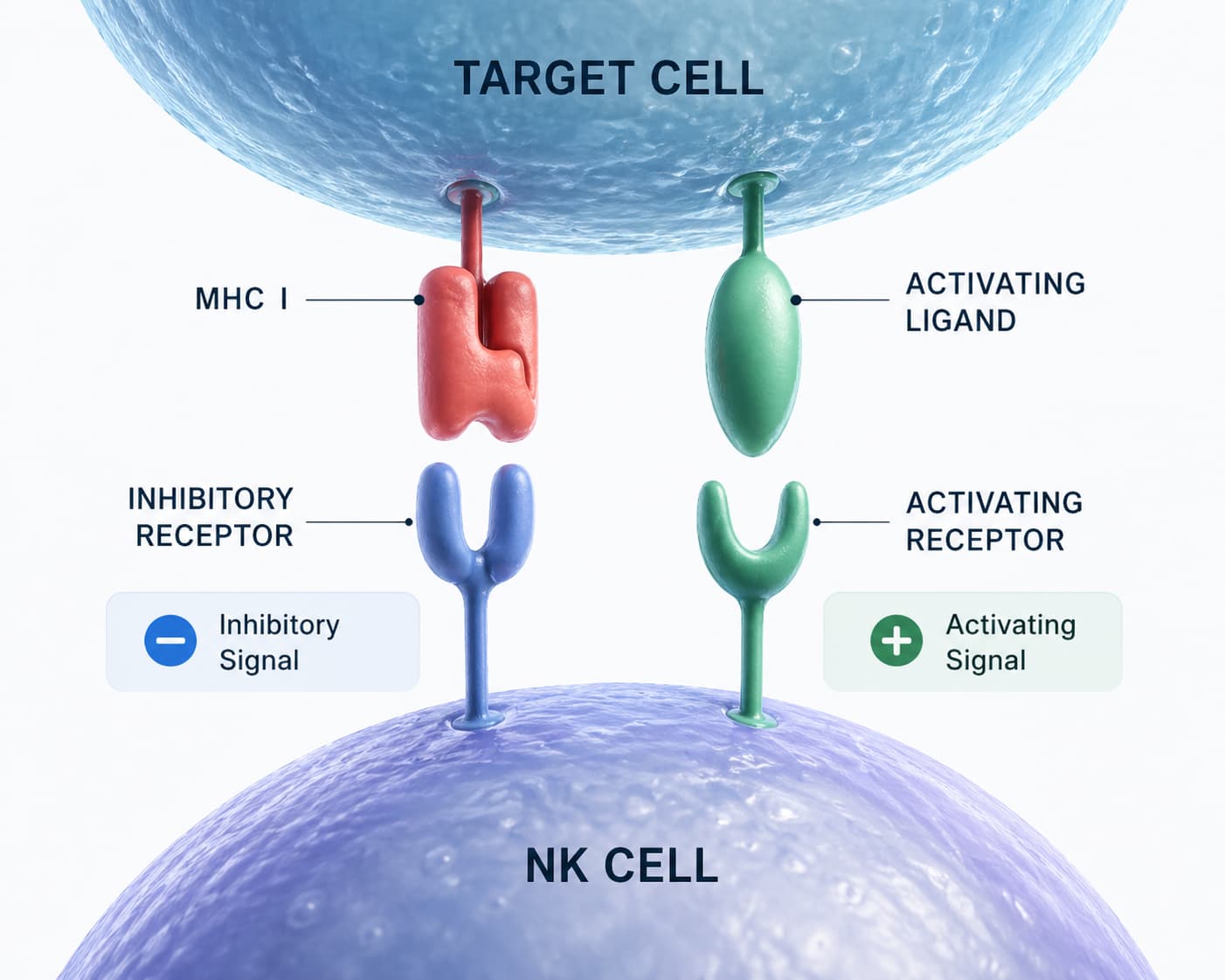
Mechanisms for infection control
Direct cytotoxicity
- Perforin/granzyme pathway: creates pores in the membrane of target cells
- FasL-Fas interaction: induces apoptosis
- TRAIL mechanism: alternative apoptotic pathway
Cytokine production
- IFN-γ: antiviral state, activation of macrophages
- TNF-α: inflammatory response, vascular changes
- GM-CSF: maturation of dendritic cells
Interaction with other immune cells
- Dendritic cells: bidirectional activation and maturation
- T cells: contribute to the development of adaptive immunity
- Macrophages: enhance phagocytic activity
Clinical symptoms when NK cells should be used
- Deep wrinkles and lines: especially on the face, neck, hands
- Reduction of skin thickness: atrophic, transparent skin
- Loss of elasticity: reduced turgor, sagging skin
- Rough texture: swollen, uneven surface
- Sun spots (solar lentigo): brown spots on the face
- Hyperpigmentation – melasma: symmetrical brown/gray spots on the face. Post-inflammatory hyperpigmentation – acne, trauma, procedures (peeling, laser). Sun spots
- Dilated capillaries: telangiectasia
- Facial redness
- Acne and post-acne symptoms
- Stretch marks (striae)
- Surgical scars
- Actinic keratosis: rough, thick spots (precancerous)
- Chronological aging – fine lines and wrinkles, especially around the eyes, forehead; loss of elasticity. Change in facial contour: “gravity effect”, sagging. Enlarged pores, especially in the T-zone. Uneven tone – uneven distribution of pigmentation. Dryness and dehydration – reduced barrier function.
- Problems related to collagen degradation – “sunken” skin, loss of volume, transparent, delicate skin. Sagging – in the area of the jawline, neck, hands. Changes in scars – old scars become more visible
- Atopic dermatitis